Redesign the work.
Multiply the people.

I spent twelve years building an AI-first company that measurably improved outcomes for millions of students. Now I help ambitious, mission-driven leaders do the same: reimagine how their teams work in an agentic world, weave AI into what they already do, or launch an AI-first product.

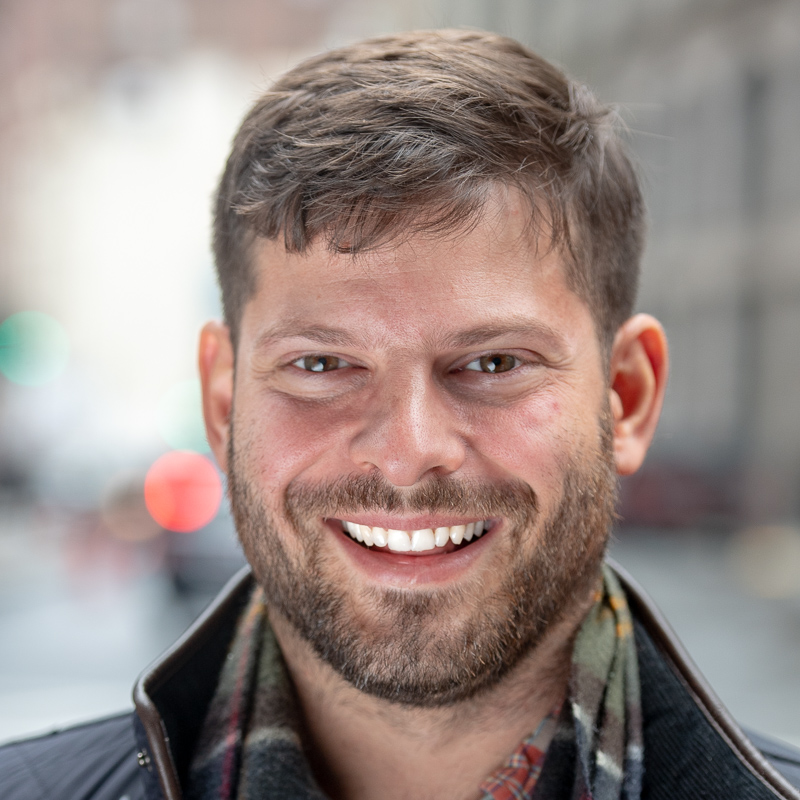
Drew Magliozzi
Drew Magliozzi
Founder & former CEO, Mainstay

Track record at Mainstay

20M+

students reached by AI coaching across 300+ colleges, nonprofits, and public agencies

12 trials

30% less new-student attrition and ~150,000 additional college grads, proven by rigorous research

2–3×

follow-through when AI coaching was paired with humans vs. AI alone, in rigorous evaluation

$13M ARR

on $20M raised from impact investors; profitable exit to Lemnis, March 2026

They start from purpose, not process.

Every role exists to deliver judgment, trust, and connection only a person can provide. The leaders who win redesign workflows from scratch around that purpose, with agents handling the rest, so their people spend far more of their time on the moments that matter most.

Bolting AI onto old workflows gets you old results, faster.

The leverage comes from asking what each role is for, then rebuilding the work around that.

AI plus people beats AI alone.

At Mainstay, when just 2% of messages came from a real person, follow-through tripled. Agents should multiply your people, not replace them.

If you can't measure it, you can't scale it.

We ran 12 rigorous trials because "it seems to be working" isn't good enough when your mission is on the line. Your pilots deserve the same discipline.

Hire technology. Don't just buy it.

There's no silver bullet, only silver buckshot. Start small, expect to get it wrong the first time, and keep improving. AI dropped in isolation fails; AI woven into how the organization actually runs compounds.

Every engagement is scoped to the leader and their needs.

Most look like one of these:

AI-first product strategy

Decide what to build, what to buy, and where to gain the greatest leverage at scale.

Good fit if you're deciding whether to add AI to an existing product or build something AI-native.

Operating-model redesign

Start from each role's purpose and redesign workflows from scratch for an agentic world, with human connection, judgment, and supervision at the core.

Good fit if your team is busy but you suspect half the work shouldn't exist.

Pilot design & measurement

Design pilots that prove real impact, so you know exactly what to scale and why.

Good fit if you've run AI experiments but can't tell your board what worked.

Fractional chief AI officer

Own the AI agenda alongside your exec team for a season, then hand it off.

Good fit if AI is a top-three priority and nobody on the team owns it.

Board & executive advising

A founder who has made these calls under real stakes, there when you make your boldest decisions.

Good fit if you want a thought partner who has raised, scaled, and exited.

Product-market fit through consultative sales

Use early sales conversations as discovery, so what you build is what customers already want to buy.

Good fit if you sell into education, workforce, or government and the pipeline isn't converting.

Twelve years, one question: can AI help people do what they already want to do?

2014

"Wouldn't it be nice if kids could text their way to college?"

After a decade running Signet Education, a tutoring and admissions practice I started in a Cambridge apartment, I had a simple problem: students didn't answer emails or phone calls. The ones who got expert guidance thrived; the ones who didn't fell through the cracks.

One day I wondered out loud whether kids could text their way to college. Before I could explain how dumb that was, my friend Kirk Daulerio, a former admissions officer at Princeton, Penn, and Bowdoin, was telling me to build it. So we co-founded AdmitHub.

2016

Pounce

Off-the-shelf AI didn't know what a "quad" was, or that Georgia State's orientation was called "Incept," so we built our own natural-language system for higher education, and patented it. It used neural attention, the core mechanism behind today's transformer models, to read students' texts, misspellings and shorthand included, and it learned on the fly from staff feedback. With Georgia State University, we launched Pounce, a chatbot that texted admitted students through the summer before college.

In a randomized controlled trial, Pounce exchanged nearly 200,000 messages with 3,100 students and cut summer melt by 21%. Enrollment rose 3.9%, worth about $3 million in tuition, and Georgia State posted the best enrollment in its history.

2017–2021

Proving it, again and again

The same idea applied to every part of college life, from financial aid to housing to a FAFSA question at 1 a.m. So in 2018–19, we tested whether AI could help students stay in college, not just arrive. Georgia State's head of student success and the lead researcher summed up the randomized trial:

"Conversational AI chatbots… helped Georgia State boost rates of FAFSA filing and registration for the subsequent fall semester by 3 percentage points. Scaled to the entire Georgia State undergraduate student body, an impact of this magnitude translates to more than 1,300 students taking the next step in their college journey who otherwise might have stopped out or been stuck in place."

— Tim Renick, Georgia State University, and Lindsay Page, University of Pittsburgh, in Higher Ed Dive, 2020

We didn't stop there. Working with independent researchers, including Brown University's Annenberg Institute, we ran trial after trial. At Georgia State Perimeter College, students who got AI nudges were 16% more likely to file their FAFSA on time and 14% more likely to register early. Twelve trials in all.

2021

Becoming Mainstay

We'd outgrown admissions. AdmitHub became Mainstay: an engagement platform supporting students from enrollment through graduation, built as a public benefit corporation with its mission written into its charter.

2021–2026

AI plus people

Our most important finding: AI is at its best when it multiplies people.

When just 2% of messages came from a real human, follow-through tripled. Students open up to AI because it doesn't judge them, but they need a person to feel accountable to.

Mainstay grew to 300+ college and government partners, reached more than 20 million students, and hit $13M ARR on $20M raised from impact investors, profitably.

March 2026

The exit

Mainstay was acquired by Lemnis, the nonprofit that also acquired InsideTrack, to combine AI with human coaching at national scale. The mission now has a permanent home.

What I took from it: those twelve years are the playbook I bring to every engagement. Start from purpose, put people at the center, and prove it before you scale it.

Twenty years building things that help people learn and succeed.

My parents met as AmeriCorps VISTA volunteers, so public service and education were the family business long before they were mine. I'm a three-time founder and a builder who learned to code at Hack Reactor after nearly a decade running a company. I believe the best technology makes people more human, not less.

I've served on the board of Cambridge School Volunteers, and I live in Concord, Massachusetts, with my wife and our two kids, where I serve on the Concord School Committee.

I've always believed ideas get better when you give them away. I used to run a blog called Please Steal This Idea, and I still work that way: if something on this page sparks an idea for your team, take it.

Speaking & press

  • ASU+GSV Summit
  • Complete College America
  • SHRM
  • Business Insider
  • Higher Ed Dive
  • EdSurge
  • Campus Technology
  • The 74
  • eCampus News
  • The Harvard Crimson
  • The Rant podcast
  • EdUp Experience
  • UIA Innovation Spotlight
  1. 2005Graduated from Harvard College. Founded Signet Education (originally Veritas Tutors), a tutoring and admissions practice that grew out of a Cambridge apartment.
  2. 2010FinalsClub & KarmaNotes. A nonprofit where students openly shared course notes and study guides at Harvard, Berkeley, MIT, Stanford, and more.
  3. 2013Hack Reactor. Learned to build the software myself.
  4. 2014Co-founded AdmitHub with Kirk Daulerio.
  5. 2016Pounce with Georgia State: 21% less summer melt in a randomized trial.
  6. 2021AdmitHub becomes Mainstay.
  7. 2026Mainstay acquired by Lemnis in March.
  8. TodayAdvising mission-driven leaders on AI transformation.

Leaders with a mission worth protecting.

Growth-stage CEOs

You have a mission worth protecting and a team worth investing in. You want a partner who has scaled an AI product, run rigorous and continuous evaluations, raised capital, and reached the exit, and who will help you build the same.

Founders selling into education, workforce, or government

You're still hunting for product-market fit. I've sold to 300+ colleges, organizations, and public agencies, so I know the buyers, the budget cycles, and the proof they need. I'll help you turn sales conversations into discovery, find the wedge that closes, and build what customers already want to buy.

Higher ed, nonprofit & public-sector leaders

You lead a college, a nonprofit, or a public agency, and you want AI to extend the reach of the people who serve your students and clients, not replace them.

See how I work with institutions ↓

More time for students. More reach for your mission.

I spent twelve years building AI that helped colleges, states, and nonprofits reach 20 million students, with outcomes proven in randomized trials. I also work with higher ed, nonprofit, and public-sector leaders to reimagine how their teams work and put AI in service of the people they serve.

What AI means for your institution

Most campus AI conversations stop at teaching and learning. The biggest wins for leaders are operational: advising, enrollment, aid, and student services, where staff deliver the judgment, trust, and connection only a person can. AI's greatest potential is amplifying the high-impact practices you already know work, so every student can access them in the moments that matter most.

How I help institutions

Every engagement is scoped to your institution, its students, and its moment. The work usually looks like one of these:

  • AI strategy & roadmap. Decide where AI serves your mission first, what to build versus buy, and how to sequence it responsibly.
  • Student & client service redesign. Redesign advising, enrollment, aid, and support workflows for an agentic world, contextualized to your institution. Scale isn't replication; it's careful adaptation.
  • Pilot design & evaluation. Prove impact on retention and completion, so you know what to scale and can show your board why.
  • Vendor evaluation & partnership. Twelve years on the vendor side means I know which AI claims hold up and how to structure partnerships that deliver.
  • Fractional chief AI officer. Own the AI agenda alongside your cabinet for a season, then hand it off.
  • Board, cabinet & executive advising. A founder who has made these calls under real stakes, in the room when you make yours.

Who this is for

College and university leaders, from presidents to VPs of student success, who see AI as a way to extend the reach of their people and want a partner with deep understanding of how campuses actually operate.

Nonprofit and public-sector executives who want to do more for the people they serve without stretching teams thinner. Across 300+ partnerships I've learned your constraints, budget cycles, and the evidence funders expect.

If you're rethinking how your institution works, deciding where AI belongs in student or client services, or building the case for your board and funders, let's talk.

Three simple steps.

1

A free 30-minute conversation

Tell me what you're wrestling with. I'll tell you honestly whether I can help, and if not, who can.

2

A scoped proposal

A short written plan: the outcome, the work, the timeline, and the price. No open-ended retainers unless you want one.

3

We do the work together

Hands-on, alongside your team, with clear milestones and a handoff so your people own what we build.

Let's design how your team does its best work.

If you're rethinking how your organization works, deciding whether to weave AI into an existing product, or planning to launch a new AI-first product from scratch, let's talk.